
Welcome to Q1 of 2026. We’re currently on the ground in Ethiopia, Mexico, & Kenya sourcing coffee for the coming months, as final Peru containers go afloat from a challenging yet productive season. The C market has tentatively sustained something more level than we’ve seen in recent quarters, shipments are starting to plan routes through the Suez again, all origins are currently relieved from coffee tariffs, & a strong sense of moving forward despite uncertainty around future upheaval is the moment. Read on for the scoop on logistics, the C market, & every origin in which we work. Click here to listen.
Logistics, Port, & Warehouse Updates
 After a year marked by trade policy uncertainty & disruption in the global ocean freight market, minimal demand growth is forecast for 2026. Spot & long-term contract rates are expected to decline as carriers manage excess fleet capacity through blank sailings & service route adjustments. Tariff policies weighed on US imports in 2025, & while January 2026 is expected to show the first month-over-month increase in US imports in 6 months—driven by the ramp up ahead of the Lunar New Year—the overall outlook for the year remains relatively flat.
There has been considerable discussion around a potential return of global shipping services to the Suez Canal in 2026, & carriers have begun taking cautious steps toward resuming Red Sea transits. CMA CGM announced plans to restart select Suez Canal services beginning in January 2026, & Maersk confirmed that one of its vessels completed an initial transit through the Red Sea this past December. Other carriers have yet to announce similar plans. A broader return to Suez routing remains contingent on a sustained ceasefire in the Middle East & a material reduction in risk to vessels & crew.
Port fees on Chinese-built & Chinese-owned vessels proposed by the United States Trade Representative went into effect on October 14, 2025, followed by retaliatory fees imposed by China on US vessels. However, after the US & China negotiated a trade deal was negotiated November, both countries agreed to suspend fees for one year.
The tariff landscape, particularly as it relates to coffee, has continued to evolve. On November 5, the US Supreme Court heard oral arguments in a case challenging the legality of President Trump’s tariffs imposed under the International Emergency Economic Powers Act (IEEPA). The IEEPA tariffs remain in effect while the case is under review & the Court has not yet issued a decision.
On November 14, President Trump issued an executive order exempting certain agricultural products, including coffee, from all reciprocal tariffs. A few days later, on November 20, the administration expanded the list of products exempt from the additional 40% tariff on Brazil to include coffee exports, providing meaningful relief to US importers & consumers.
Looking ahead, potential trade policy changes could continue to shape the coffee market. The US Trade Representative has indicated that the US may seek to revisit aspects of the USMCA—the trade agreement between the United States, Mexico, & Canada—during the first joint review of the agreement, scheduled for early July 2026.
Supply, Demand, & The C Market
 Entering 2026, the market feels like it finally took its foot off the accelerator—at least a little. We’re still very much in elevated territory (mid-high $3s), but the violent swings of last quarter have cooled into something more like sustained tension. Weather risk in Brazil & tight ICE stocks continue to underpin price, while currency strength in the Real has kept origin selling measured. These forces have created a strange balance: not enough bullish conviction to re-test the highs, but not enough bearish evidence to meaningfully break lower.
Fundamentally, ICE-certified stocks remain at multi-month lows & demand hasn’t backed off, especially in the specialty segment where consumption trends continue to favor quality despite price. Seasonal production increases in South America could have added downward pressure, but so far yields, rain patterns, & availability have not signaled meaningful relief.
EUDR & tariff policy continue to hang over the market—no longer the headline-grabbing catalyst of the last several quarters, but still shaping sentiment & risk-taking behavior. While coffee tariffs are no longer pushing costs higher (outside of a handful of lots that entered during the tariff window), they still seem to be influencing behavior somewhat. People remain cautious, delaying decisions or spreading out buying in smaller tranches. The tariffs may be gone, but the general feeling of unpredictability created by them hasn’t disappeared yet. That psychological hangover is still lingering, though we hope it will become a distant memory. It’s less about tariffs themselves now & more about the uncertainty they introduced.
At origin, sourcing is still competitive—we always emphasize how it’s shaped by, but does not behave like, the C market. The coffees we work with in Peru & Mexico remain specialty-driven, & pricing reflects quality more than it does exchange movements. Even with a high flat price, there’s tremendous appetite for value at the top end of specialty. That continues to push us to forecast more precisely & secure volume earlier into the harvest cycle. It’s important for us & our producing partners to plan early. Forward commitments remain the most reliable way to ensure roasters get the profiles, lots, & volumes they need as our spot position stays intentionally tight & disciplined.
For us, the strategy hasn’t changed: stay steady, stay communicative, & support both ends of the supply chain—producers trying to manage liquidity & roasters trying to forecast amid uncertainty. Our job is to bridge those realities without compromising value for either.
We continue to support relationships & qualities that define our model. We’re working closely with producing partners to navigate liquidity & cash-flow constraints, moving coffee as efficiently as possible into destination, & communicating openly with roasters about timelines, exposure, & pricing. It’s not lost on us how difficult forecasting is right now—we’re feeling that same pressure. Traceability & quality continue to be non-negotiable for us. We know it’s not the easiest moment to build a buying plan, but we know from experience that being thoughtful & proactive beats being reactive in markets like this. We believe doubling down on quality & clarity is what gets everyone through periods like this.
We’re watching the next quarter for signs of whether this balance breaks—to the downside if seasonal supply or any regulatory changes offer relief, or to the upside if weather & stock data tighten further. For now, the market appears to be stabilizing at altitude, & the work is to remain thoughtful & strategic rather than reactive.
Ethiopia
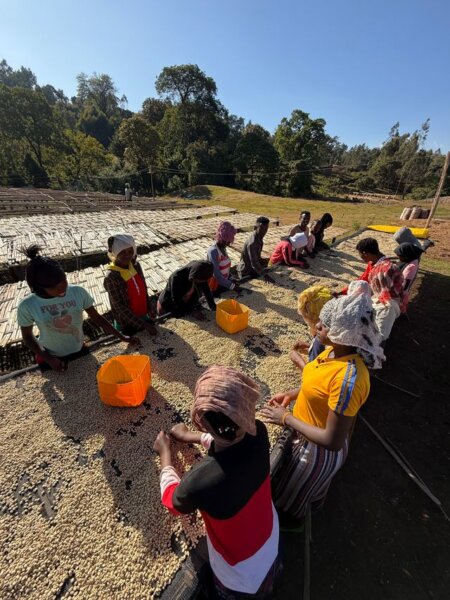 As many of you are likely aware by now, Ethiopia’s 2026 season orbits around historically high cherry prices. Whereas last season our supply chain partners peaked at prices somewhere around 100 birr/kg cherry, this round we’ve seen prices registering around 215 birr/kg cherry.
The coffee trade had very little support from local banks heading into the 2024/25 season, but this year the largest processing & export players appear to have been flush with cash as harvest began. One outfit in particular pushed prices well above 200 birr/kg cherry in the most coveted areas of Sidamo, while another did the same in Gedeb & other prized areas of Yirgacheffe. One can only assume that this is an attempt to corner the market & force local players to source their needs directly from them.
Washed volumes are expected to be lower than last year, which was already lower than average. We’re seeing this play out firsthand as we move from warehouse to warehouse sampling coffee in Addis right now. We expect to finish our washed acquisitions by first half-February even though the harvest itself started several weeks late.
Due to these higher prices, FOB levels are higher than last season—though manageably in-line in terms of what we’re sourcing & trading from our other strategically important origins like Peru, Mexico, & Kenya.
Red Fox will begin shipping Ethiopian coffee in February & plan to conclude final shipments in April/May.
Life remains charged politically in certain parts of the interior. The peace agreement with the Tigray in the north is still in place, though frail at best. The intermittent violence between the Ahamara Fano (Fano) & Oromo Regime Forces continues across certain pockets of the country.
Available Lots
Fresh, top G2 lots from this current harvest will begin to ship in February. Find a current offer here while supplies last. We expect to have beautiful coffees from Shakiso Guji, Bensa Sidamo, & Aricha Yirgacheffe from the South, as well as from Metu Illubabor & beyond in the West. Please inquire with your Red Fox rep about these coffees as well as organic G2 offerings coming through our pipeline.
G1 offerings from Agaro, Gotiti, Bensa & beyond will begin shipping late Feb/early March. Please check in with us for more detail on these as well.
Last but not least, we are down to our last 70 bags of 2024/25 Ethiopias in the Annex. Both washed & natural are available w/Gogogu & Bombe showing particularly well of late. We are out of stock in New Jersey & Houston.
Mexico
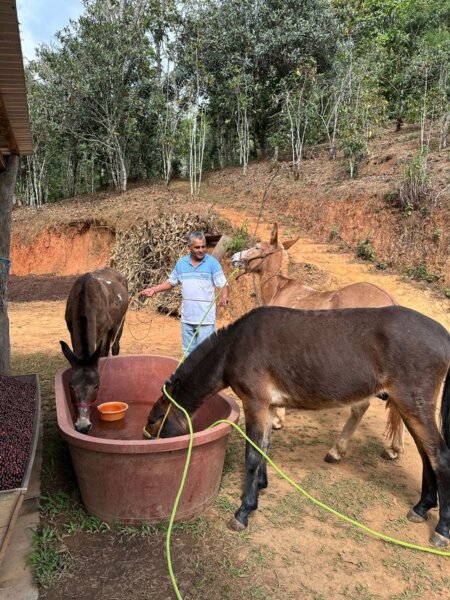 The start of 2026 brings the official launch for our Mexico sourcing season. Production areas across the country at lower & middle altitudes are in peak harvest. Higher altitudes are just starting to pick the first rounds.
Our sourcing team in-country made our initial round of farm visits in Oaxaca during December. We’ll continue to meet with producers for the next couple of months to put firm plans into place with a clear sense of delivery timing, price, & quality.
Overall, the harvest looks strong in all regions—not so high-volume relative to the past few years, but average size with a very good cherry set according to multiple partners & sources in Veracruz, Chiapas, Oaxaca, & Puebla. Prices started very high across the country for cherry & parchment amid a very competitive purchasing market, but have started to even out at a rate more or less flat relative to 2025 prices.
Available Lots
All coffee from the 2025 harvest has sold out. We’ll be launching official forward booking shortly, but please get in touch with your reps right away if you have an idea of coffees & volumes you’d like to secure for 2026. Stay tuned for more news from the ground.
Kenya
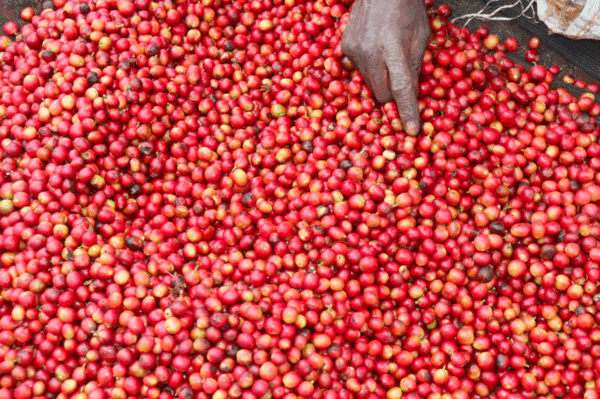 With harvest concluded our in-country partners are reporting nice qualities across grades & a surprisingly high volume of AA coffees per outturn. The main crop of 25/26 season has seen consistent rains & a temperate drying period. With the market continuing to come off after Q4, the Nairobi Coffee Exchange has seen stable & consistent prices so far, with an expectation for things to remain that way. We expect to see additional containers of Kenyan coffee coming in with similar qualities & prices to our first box booked.
We expect to continue our relationship with the producers & coffees from the New Ngiriama stations (Kamwangi, Kiamugumo, & Kainmui), as well as other favorites from Gititu, Gicherori, Karatu & more. We’re also excited to purchase coffees from new partners like Ruarai & Ibonia Estate. Since the 23/24 regulations, things have evolved in Kenya. More than ever, we’ve worked to both remain agile & focus on supporting longer-term relationships. What that means is that whether roaster clients are looking for the same coffee year over year, or just the best scoring cup, we can meet that need.
Available Lots
We’re in the midst of forward booking now, so reach out & get a contract on the books to be first in line. PSS of incoming lots will be available shortly.
Rwanda
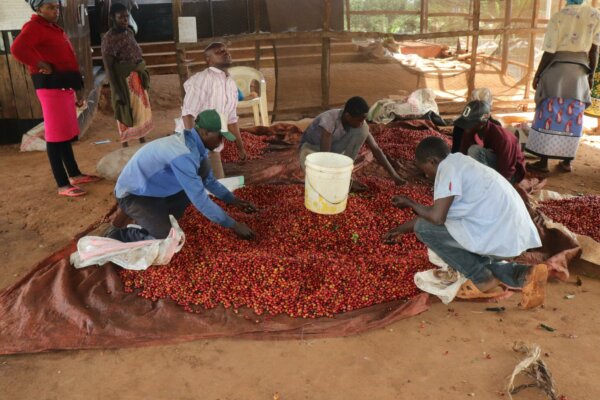 The 2025 harvest in Rwanda was one for the books. The country’s coffee sector posted record revenues of nearly $150 million USD & exported 23,860 metric tons of green coffee according to the National Agricultural Export Development Board (NAEB). Coffee production & yields were up significantly across the country compared to 2024, with high international prices also contributing to the increase in revenues.
For the 2025 season, NAEB set the minimum cherry price at a new high of 600 RWF per kilo—a 25% increase over the 2024 minimum. In practice, however, farmers earned an average of 900 RWF per kilo, well above the floor price.
Rwanda is currently in the off-season, but harvest activities begin again in March. Early forecasts for the upcoming season point to strong yields & good quality, with increased rainfall expected in the coming weeks.
Available Lots
Our first Kanzu lots have arrived & are now in warehouses ready to deliver! We’re loving the profiles this year: laden with ripe fruits like blackcurrant, dark plum, & cherry, alongside complex honeyed sweetness & bright lime zest & rhubarb acidity. We have just a handful of bags of washed Kanzu available in Continental, NJ currently. Reach out to your sales rep with interest before they’re gone.
Peru
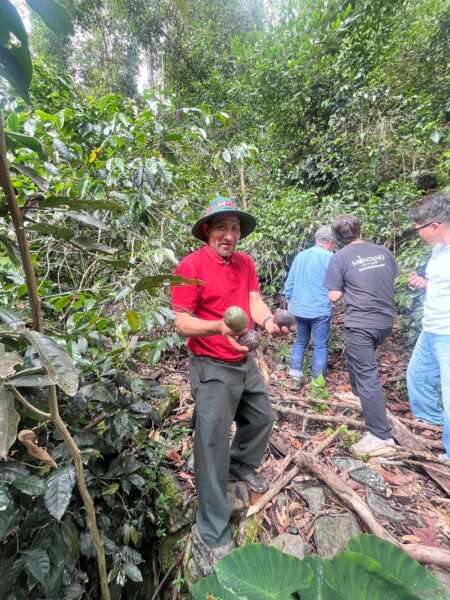 Peru shipping season is nearly finalized with the last containers booked to go afloat at the end of January. Despite myriad challenges, we wrapped up the season hitting our target volume, with final shipments only slightly later than usual. Quality of delivered coffees has been top-tier with producer ID lots as good as or better than they’ve ever been. Our sourcing partners are now in the process of visiting producers to get harvest estimates for the 2026 season while preparing for certification renewal inspections.
The 2025 Peru harvest was marked by compounding factors including:
- The volatility of the C & local markets & record high prices that we saw in 2024
- Uncertainty & financial constraints caused by the devaluation of the US dollar
- The dismantling of USAID
This made financing a greater challenge than ever for producer organizations purchasing parchment from their member producers.
Additionally, prolonged rains at the start of the season made drying coffee difficult, which caused quality & logistical issues. Drying coffee was a challenge & we put our QC systems to hard work. It was also harder to move coffee quickly in order to maximize limited financing & use the payments from initial shipments to continue collecting parchment.
Available Lots
We have a limited but diverse array of spectacular Peru lots on the East Coast & in DuPuy Houston, moving very fast.
Burundi
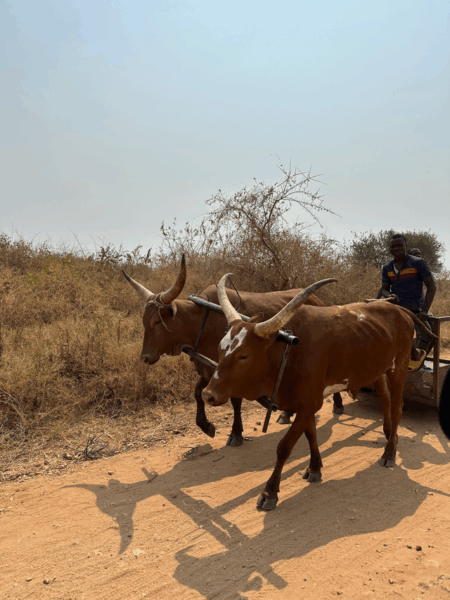 Red Fox’s first Burundi sourcing season is complete. The first 2 of our 3 shipments landed earlier this month & will clear into the warehouse shortly. We’re excited to taste your roasts of these lots.
In-country, the coffee governing body’s complete reset of leadership resulted in a much smoother export process over recent years. That said, it was not without some chaos in this notoriously logistically-challenged landlocked origin.
As mentioned in the previous report, 2025 brought a welcome larger harvest compared to the 2024 season. Based on strong rains, flowering, & budding on the trees, 2026 looks promising as well. Our partners anticipate collection point regulations from ODECA being a key strategy for volumes & quality. We’ll see harvest begin in March/April & likely last through July.
Available Lots
These first 2 shipments represent the superb double-fermented washed & sun-dried naturals from Burundi Specialty Seeds (BSS). We have very few bags remaining of these lots.
Our final shipment will bring more washed lots from Kayanza as well as new coffees from Ngozi.
Colombia
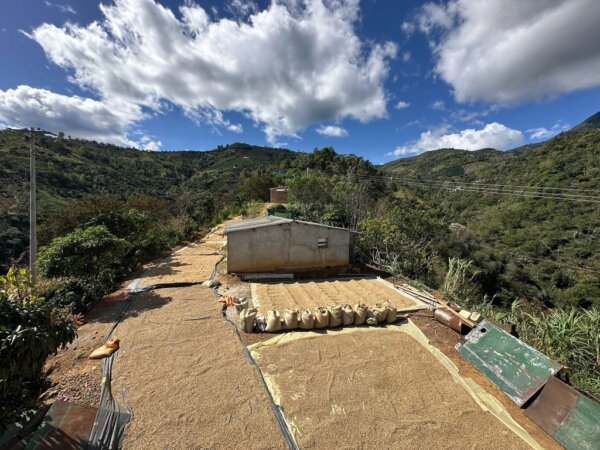 Colombia’s current weather conditions look favorable for a good 2026 harvest. In northern Colombia, flowering has already begun & looks very promising.
Recent events in neighboring Venezuela have generated uncertainty about how various groups will react. A few days ago, there were protests by armed groups against the current US administration, affecting transportation throughout the country. Caucas population experienced attacks by FARC (unfortunately not a rare occurrence at this time), but everything currently appears calm.
The increase in fuel prices has caused issues for transporters along with insecurity of the safety of their carriage.
Available Lots
We brought in a very selective slate of Colombia this year, which has now almost entirely sold out. Contact a rep to get your share if you haven’t already.
Bolivia
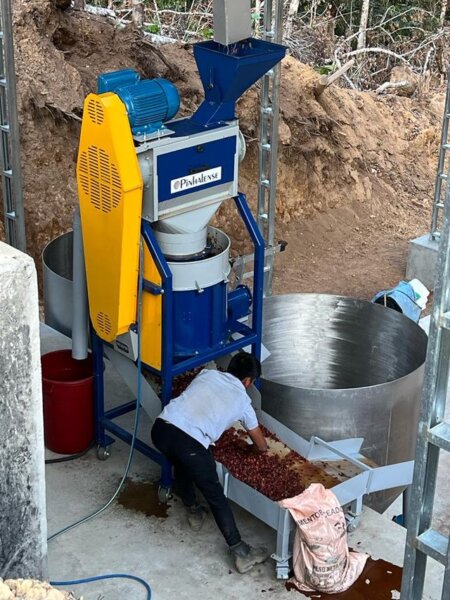 The Bolivian harvest season is now complete. Our final shipments have landed & stripped into warehouses in California & New Jersey.
Available Lots
We have 100+ bags of Caranavi Carrasco available in New Jersey. This is a bulk/blender offering in excellent condition.
Interested in sourcing coffee with us? Reach out at info@redfoxcoffeemerchants.com. To learn more about our work, check out our journal and follow us on Instagram @redfoxcoffeemerchants.