
Welcome to Q2 of 2026. As geopolitical tensions increase, logistics grow more complex & expensive even as the C market eases up, unmatched by local prices for premium coffee in our sourcing regions. Meanwhile, our Ethiopia coffees are afloat & better than ever, Mexico lots are trucking overland, Kenyan lots are making landfall, & we’re working hard to stay ahead of the chaos & buffer the world’s volatility with a measure of stability.
Read on for the scoop on logistics, the C market, & every origin in which we work. Click here to listen.
Logistics, Port, & Warehouse Updates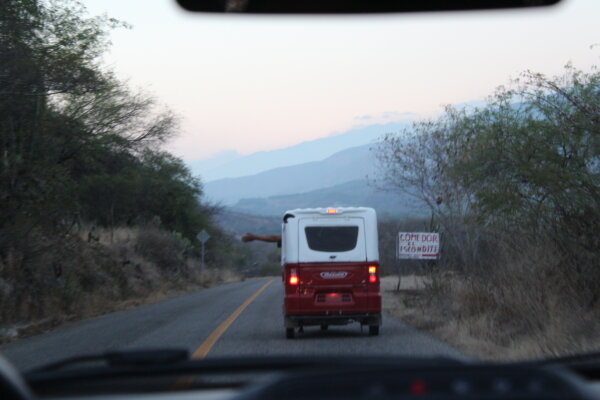
The US & Israeli war with Iran that began on February 28 & widening conflict across the Middle East are causing significant disruption & uncertainty for global trade logistics. Ocean carriers have implemented emergency surcharges for all vessels in the region. Bunker fuel rates have been climbing since the war began as transits through the Strait of Hormuz are severely limited & global oil prices have spiked. Emergency fuel & bunker surcharges currently affect all tradelanes, & market rates for ocean freight are climbing.
Logistical Disruptions
Any progress made earlier in 2026 toward reopening the Suez Canal to more container traffic has been halted as ocean carriers have diverted vessels planned for Suez transit around the Cape of Good Hope, adding time & cost. The cascade of disruptions is causing congestion at transshipment hubs & reduced schedule reliability, especially for vessels traveling via Asia. Container availability is also affected, with shortages of 20 foot containers currently being reported for shipments out of East Africa. The rising cost of fuel has had an impact on the domestic trucking market as increased rates combined with preexisting driver shortages causing capacity constraints & delays across domestic supply chains.
Tariff Updates
On February 20, the US Supreme Court issued a ruling finding the Trump administration’s IEEPA tariffs unlawful. Following the ruling, US Customs & Border Protection (CBP) officially stopped collecting IEEPA tariffs. President Trump announced a 10% global tariff shortly after the ruling, which CBP began applying in its place. Green coffee remains explicitly exempt from the new 10% global tariff rate.
The Supreme Court ruling did not address refunds for tariffs already paid, however, on March 4 the Court of International Trade (CIT) issued an order directing CBP to provide IEEPA tariff refunds to the importer of record. As of March 31, CBP has reported that the system it has been developing for processing tariff refund claims is now 85% complete. CBP expects to begin accepting claims by April 20 & will provide another update to the Court of International Trade by April 14. Once refund claims can be submitted, there will be a processing window of up to 45 days before any refunds are issued.
Supply, Demand, & The C Market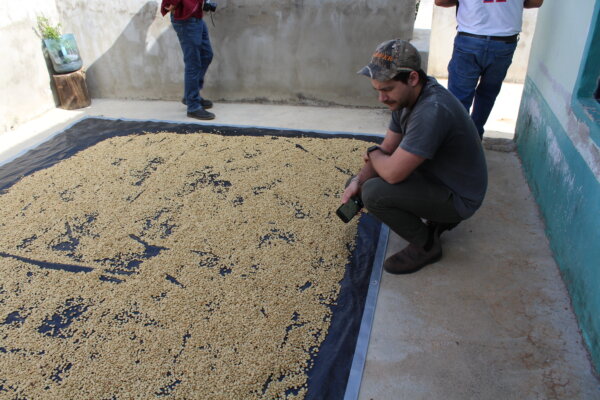
The C market has worked its way back down into the high-$2 range after spending much of 2025 above $4/lb. This correction is meaningful, but represents only a fraction of the current situation.
The primary driver of this change is the improving outlook for Brazil. Production forecasts for the upcoming cycle continue to climb as heavy rains & better conditions in key regions have eased immediate supply concerns.Production is expected to return toward record levels. This means that rather than projecting a shortage, the market is now pricing for a potential surplus. While this surplus has not arrived yet, the market is beginning to believe that supply may eventually catch up with demand.
Macroeconomics & Geopolitical Uncertainty
Macroeconomic & geopolitical forces like the war in Iran, currency volatility, & trade policy continue to influence the edges of the market. Although these factors are not pushing prices in a singular direction, they are maintaining a level of caution that dictates how participants buy, sell, & manage risk.
C Market V Real World
Despite the recent price drop, the underlying structure remains largely unchanged. Origin prices are still historically high & stocks are only beginning to improve. Because the spot price continues to outpace the future, financing constraints at origin remain a significant burden. The market is stepping back from the edge, but it has not fundamentally transformed.
The critical takeaway for us is that a softer C market does not equal softer pricing for the coffees we buy. High-quality lots remain highly competitive, & local pricing in those sectors is slow to follow downward trends in the commodity market. Producers & exporters still face limited liquidity & tight timelines, meaning sourcing at origin has not become easier or cheaper.
Instead, we are seeing a growing gap between commodity coffee & differentiated supply. The transition from a mindset of scarce stocks to surplus stocks is a significant psychological shift, but it’s not yet a physical reality in the global market. The C market provides just enough relief to suggest comfort without actually delivering it. We must continue to plan early & maintain discipline rather than assuming a softer C market indicates simpler sourcing.
Mexico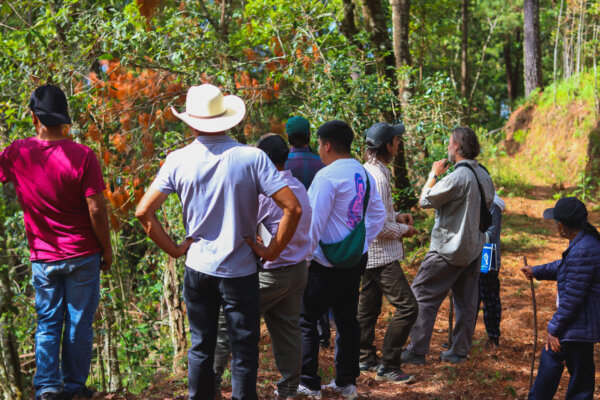
Mexico’s harvest season is in full flow, with coffee moving at all phases at origin. Harvest has wrapped in southern & western Oaxaca & is around 75% complete in the northern Sierra. In Veracruz & Puebla, it’s about 80% complete with final cherry from the highest altitude areas still to be picked. Chiapas is also almost finished picking with just the final coffees still to come down.
Our lab in Oaxaca is at peak cupping season with final offers rolling in from the field alongside warehouse arrivals & milled samples from all 4 regions. Our first containers from Veracruz & Oaxaca have been milled & shipped. We expect first US arrivals available this month.
The quality of this harvest has been outstanding so far. We are seeing good scores & exciting cups on the table. It’s also had several challenges with such high volatility in local pricing & increased demand. Costs have only continued to rise for producers, mainly around securing viable & good labor for picking. Some weather conditions (wind, rain, cold) in early harvest in some regions also affected total production.
Our Mexico team traveled extensively throughout the harvest season to meet with producers, keep atop harvest, & have direct pricing & quality conversations with all partners. We are now focused on receiving approved coffees in the warehouse while monitoring quality at the dry mill to ensure the arrivals land at the level our roaster clients have come to love & expect. We plan to continue leaning primarily on overland transit routes from Mexico to the US again this season (established last year), which give us exponentially faster arrivals & greater control over ETAs & warehouse distribution.
Available Lots
We’re currently forward booking Oaxaca, Veracruz, & Chiapas. Get in touch with your reps to discuss various available options arriving April through June to all warehouses. There’s a ton of variety coming in, but top lots & volumes will get allocated very quickly.
Kenya 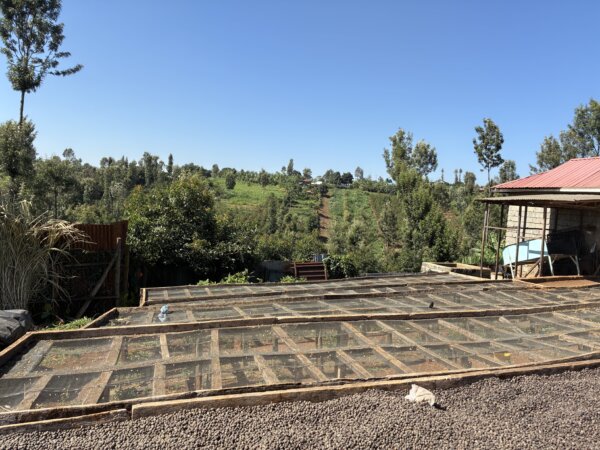
Our first Kenya container arrived stateside ahead of Expo in San Diego. We’re very excited that this container sold out completely ahead of its arrival, & that many clients received these beautiful coffees already. The additional regional & microlot containers should arrive before summer. At time of writing all the volume is spoken for.
Last week was the 23rd auction of the season for The Nairobi Coffee Exchange & saw a total of 23,000 bags purchased. This was down around 10,000 bags from as recently as last month & shows that trading has held strong for the big commercial buyers throughout the 25/26 season.
Looking ahead to planting & fly crop season, there’s been some unrest in Kenya as farmers heavily rely on fertilizer imports. The war in Iran has disrupted urea fertilizer exports globally, & continued to delay import/export business in the region. We’ve been in contact with our partners in Nairobi as our coffees have been shipping & arriving in the US to make sure things are safely on the way to our clients’ roasters.
Available Lots
At time of writing, the entire 2026 harvest has been forward booked & allocated for clients who acted quickly. Reach out to your rep with interest in the event that volume becomes available.
Ethiopia 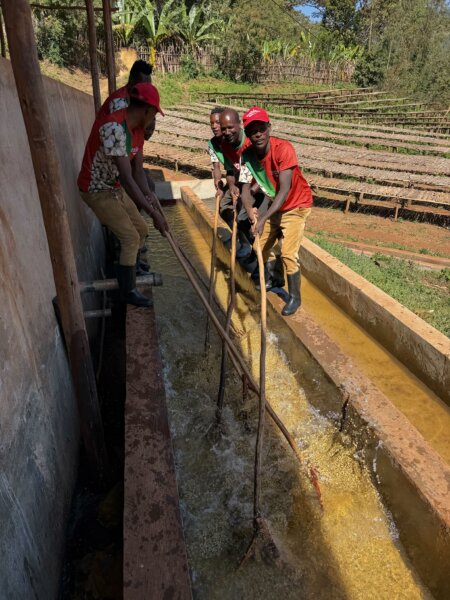
Ethiopia’s 2026 washed volumes were dramatically lower than 2025’s volumes, which were already historically low. Early competition at the outset of the harvest this past November caused cherry prices to reach record highs. Government-mandated FOB levels have followed suit as more buyers than ever looked to move early shipments in January/February. While quality is top-tier, washed coffee comes at a premium this season in terms of availability & cost.
With current harvest now concluded, the biggest news coming on the Ethiopian trade front is delays at the dry port in Mojo & Djibouti. 20 foot containers are difficult to obtain in Addis. Fuel shortages abound across the country. Shippers continue to charge premiums for vessels calling into Djibouti due to the US & Israeli war in Iran. There is an air of desperation beginning to creep in at the seams of the trade.
With an all-time Brazilian crop looming on the horizon, buyers have expected significant price decreases in Ethiopia. March offered some relief before increased volatility in the C market caused an upward correction. A combination of lack of fuel, surcharges, lengthy shipment delays, & C market volatility has turned larger, commercial buyers away from the Ethiopian harvest.
All of our Ethiopia shipments are afloat. For others, shipments that have yet to go afloat will now likely face substantial delays.
Available Lots
Quality is exceptional this season—better than we’ve tasted in several years.
We have over a dozen containers afloat with ETA’s into NJ ranging from later this month to mid-May. We have washed G1 & G2 available as well as top G1 naturals. Please reach out to your reps with any potential interest.
Rwanda 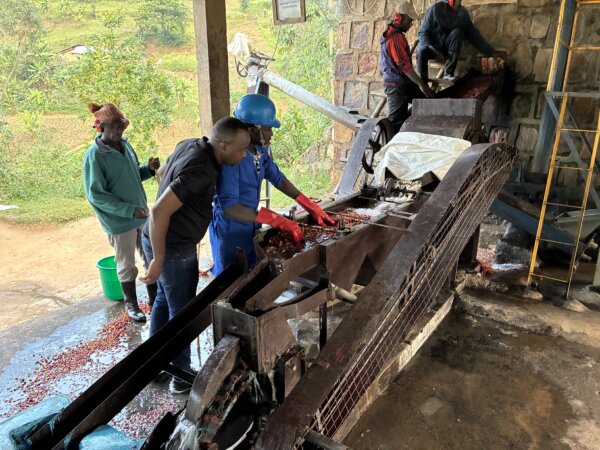
Following Rwanda’s 2025 bumper crop, 2026 harvest volumes are anticipated lower, but favorable weather, consistent rains, & recently planted trees entering production should make the reduction in volume relatively small. Unlike the prior year, when harvest condensed over a short period, the 2026 harvest is expected to start early & continue for longer. An extended harvest period is usually good for quality as it gives wet mills the capacity for proper drying & handling. In Nyamasheke around Lake Kivu, the harvest began early & should reach full swing in April & May. High coffee prices over the last 2 seasons have had a motivating effect on farmers—they are more willing to invest in farm maintenance & planting new seedlings.
Despite a lower C market price, the National Agricultural Export Development Board (NAEB) raised the minimum price for quality, well-ripened coffee cherries to Rwf750 per kg in January, up 25% from Rwf600 in 2025. With a slow start to the harvest season, competition for cherry buying is intensifying, pushing washing stations to pay more for cherry than last year. Pricing may stabilize somewhat once volumes increase in peak harvest.
Available Lots
Just a handful of available bags of washed Kanzu from the 2025 harvest season remain in NJ. We’re tasting notes of dried apricot, cola, bing cherry, stone fruit, & blackberry in these lots. Reach out to your sales rep with interest!
Peru 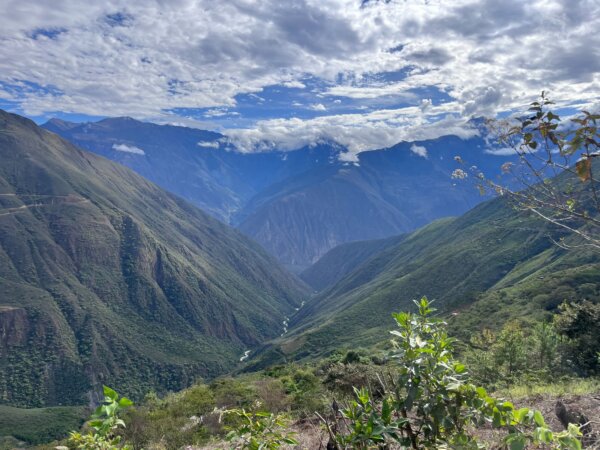
The rainy season in Peru, which begins in December & lasts through March or April, was especially intense this year due to the coastal El Niño phenomenon. There was heavy rainfall across Peru in the second half of February which persisted into March in some areas of northern Peru. The unseasonably high rainfall significantly impacted coffee growing communities as landslides wiped out roads & cut-off access to & from the larger towns & cities.
The harvest at higher-altitude farms is still a couple of months away, but producers are busy preparing for the upcoming season: weeding & clearing their coffee plots, calibrating depulpers & farm equipment, & maintaining wet & dry milling infrastructure on their farms.
Producers organizations typically spend part of the off-season visiting farms to conduct internal inspections in preparation for certification audits & renewals, though in some cases rains have delayed this. Managers & leaders have also been meeting with lenders to secure financing for parchment purchases.
Peru continues to experience prolonged political instability, characterized by presidential leadership changes, low government approval ratings, corruption scandals, & social unrest. This situation creates uncertainty around key issues such as investment, security, & the continuity of public policies supporting different sectors, including agriculture.
Peru will hold presidential elections April 2026 in a context of high political fragmentation & low public trust. The race features a vast number of candidates & uncertainty around the outcome.
Nevertheless, the Peruvian sol has remained relatively stable against the US dollar in early 2026. Volatility may increase depending on this year’s electoral results.
Available Lots
We have a limited but stellar slate of Peru lots across warehouses selling out up quickly.
Burundi 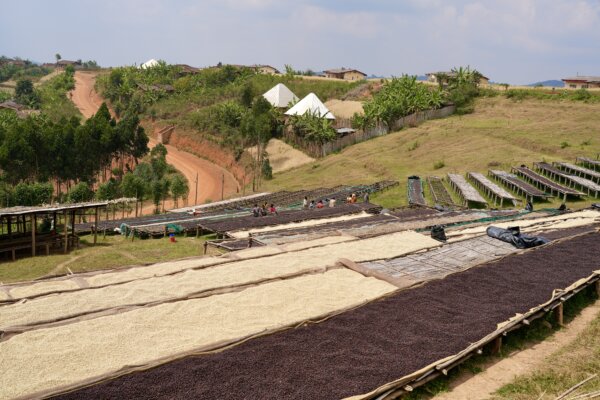
All Burundi containers landed with approval samples sent to customers. While our final shipment experienced an unexpected delay, the arrival quality of our selections from our first year in Burundi were superb. It’s been great to see them on many roasters offering lists already.
With much rainfall in the off season, the production outlook is very strong for the 2026 harvest, already budding at lower altitudes around the country. Our sources in the highest altitude growing areas of Kayanza & Ngozi expect to see peak harvest in April/May/June, tailing off in July.
The coffee governing body ODECA (Office du Café) passed a new law that will oversee everything from seedlings & spraying to quality control & paperwork. Historically, Burundi’s coffee regulations have changed annually, but this year Burundi is introducing a new Coffee Law to stabilize the regulatory environment & reduce yearly fluctuations. That sounds great after year after year of navigating rule changes, sometimes mid-harvest.
Farmer payments are also changing this year with a new mandate now requiring all processors to pay farmers directly through bank accounts, a positive development for transparency & financial inclusion for farmers.
Available Lots
We’re down to the last few bags of Burundi—quality was excellent and sold well.
Colombia 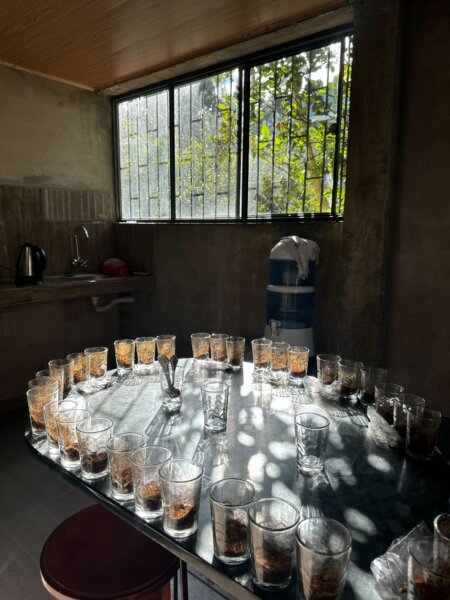
In Southern Colombia’s coffeelands, persistent rainfall continues to cause irregular flowering. Strong storms over the past few weeks have added property damage to the mix.
Uncertainty persists due to unexpected fluctuations in the C market. Some producers are considering holding onto their coffee in hopes of sudden price improvements.
Following the first round of elections last month, domestic attacks by FARC have continued in the southern regions of the country (Cauca/Huila). The second round of elections is approaching, scheduled for May 31 of this year, leading to heightened uncertainty regarding who the country’s next leader will be.
Interested in sourcing coffee with us? Reach out at info@redfoxcoffeemerchants.com. To learn more about our work, check out our journal and follow us on Instagram @redfoxcoffeemerchants.