
2026 brings our third Kenya season since the government’s regulations on coffee sourcing underwent a major shift, with a goal of limiting monopoly power in vertically-aligned sourcing companies. It’s made things complicated for many, and we’ve seen a lot of risk aversion from other sourcing companies in Kenya.
For us, we’ve continued to grow in Kenya each year and couldn’t be more excited about what we have on tap. As we do every year, we got boots on the ground early to select from the fresh harvest, traveled extensively, cupped thousands of coffees rigorously, and purchased decisively. We bought some coffee in each of the three ways possible under current governmental regulations, and they’re all superb. Our offerings in 2026 include a ton of famous names across all grades, through all available channels, with better traceability than we’ve ever been able to offer in Kenya.
Climate Change & the Fly Crop
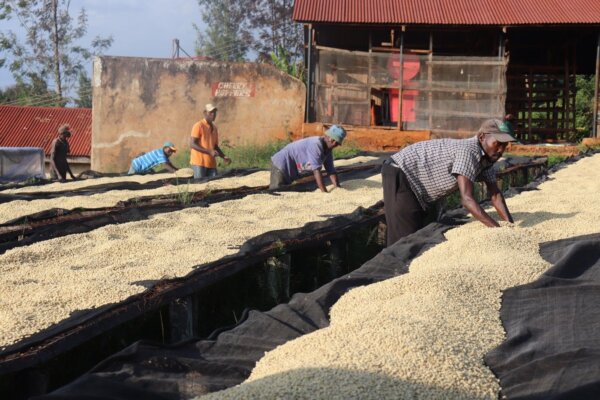 This past ripening season had great rains and excellent maturation, reflected in the quality we saw and sourced. Overall, climate change has shifted Kenya’s harvest timeline without harming quality—what’s changed is only when we buy our Kenyan coffee.
Kenya has two harvest seasons: the earlier fly crop, and the later main crop. The fly crop is generally less sought-after, and not where we purchase our coffee. Early lots from the main crop historically carried a general association with and risk of being fly crop coffee that didn’t sell, increasing the risk of quality issues and reduced quality.
Climate change has been pulling things in a different direction for some time now. The fly crop has drifted later as the main crop shifted earlier. We get in just in time for the main crop to drop the majority of its fruit, typically early January. This timing would have been considered early by us in the past, but has recently become standard. Whereas a decade ago weeks 16 through 18 held the best outturns, now we see quality peak around weeks 9 through 13.
Since these harvests are now so close to each other, our on-the-ground QC practices are careful, screening heavily for potential presence of fly crop coffee. But this year’s fly crop saw astronomically high prices, leading producers to sell out any coffee they had. This year in particular, we didn’t have to worry about fly crop coffee trying to nudge into the main crop lots we’ve purchased. When we cupped, everything was ultra-fresh without us having to sort out the amount we usually do on first pass.
Direct Smallholder Support through New Ngiriama Coop
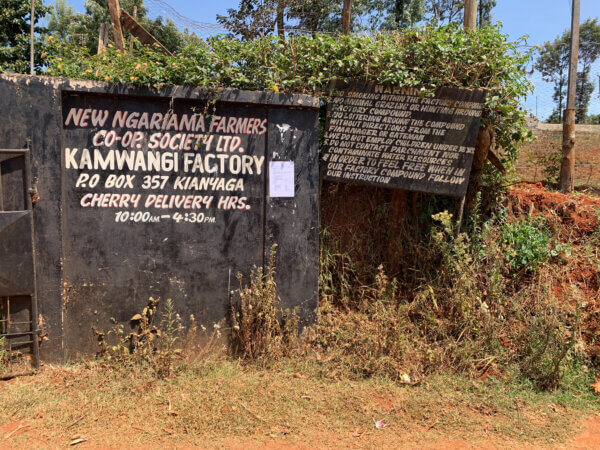
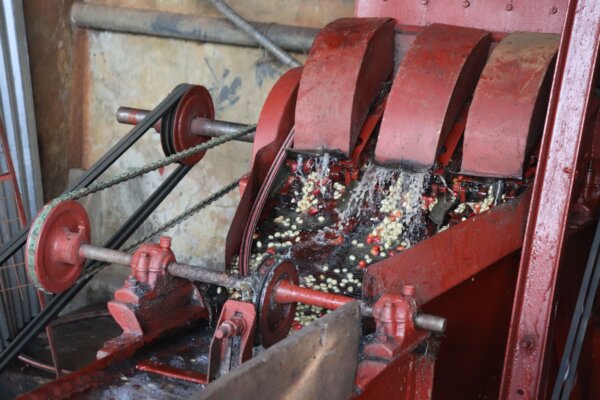 First, the most familiar way. For the coffees from our long-standing relationship with the New Ngiriama Cooperative, we approach directly alongside a brokerage firm associate and discuss prior purchases, specific lots we’d like to buy again, and prices. We add a premium here to ensure first access, as well as to reward the length and compatibility of relationship and values.
The coffees coming from New Ngiriama include Kamwangi, Kiamagumo, and Kianmui. We bought a really substantial amount of coffee this year for New Ngiriama and the farmers they serve.
Exploring Small Kenyan-Owned Estates
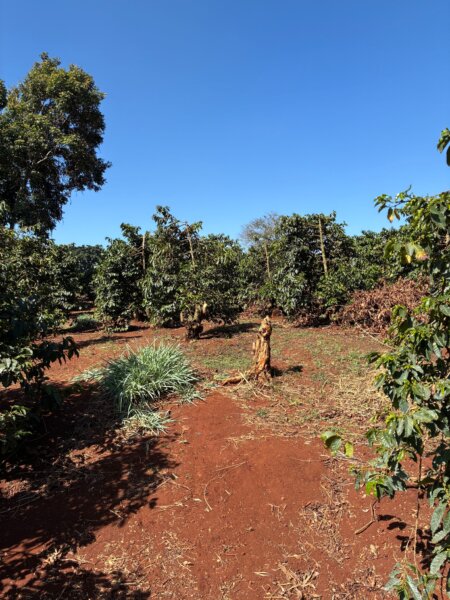 This year brought about an exciting first for us: sourcing directly from small, Kenyan-owned estates. We’ve always avoided sourcing through estates because of the ethical implications. They’re often large, owned by disproportionately wealthy and/or colonial presences, including large multinational corporations. This year we dug into finding relatively small, Kenyan-owned estates, and found three.
Ibonia Estate
Ibonia is run by young Kenyan farm manager Solomon Waithaka. He comes from a food and agriculture background rather than a coffee one and is extremely meticulous with data logging and outturn separation. He grows old SL plants, and where most estates blend all their coffee together, he separates carefully by date. His pruning practices are next-level in precision, and he uses old pruned material for firewood because it’s so substantial. 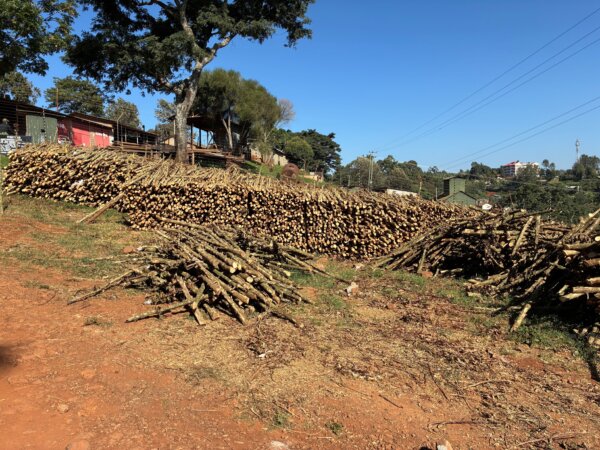
Gifted Estate, Moses & Teresa Nganga
Husband and wife team Moses and Teresa run Gifted Estate, a tiny operation from which we bought almost the total production this year. They’re highly engaged with the specialty model and improving quality. Their approach instead of replanting is stumping and grafting (except in case of disease). So, in addition to very old SL plants they also have some unique young Riuru plants grafted onto very old, thick SL root stock right near their house, which we’ll separate next year.
The coffees from here are very fruited in a way that almost resembles a very clean natural process coffee, with notes of perfectly ripe coffee cherry and grape.
They also grow tea and avocados, and raise dairy cows (like Dan, pictured below).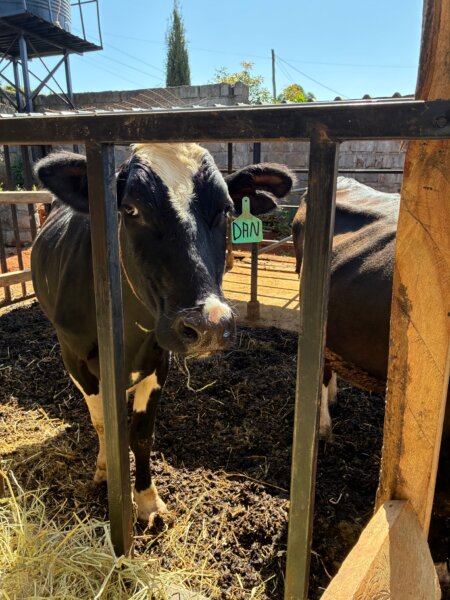
Malaki Estate, Florence and Jessica Marigi
We met Florence and Jessica Marigi through a Kenya producer we’ve known for a long time named Menesseh Kibochi. Florence (his mother) and Jessica (his sister) produce extremely coveted coffee we got by committing to their total volume. They grow old SL plants with absolutely premium quality. We found out about this opportunity the day before leaving, but knew it would be worth it—so we roasted, cupped it, and bought it right away.
The Nairobi Coffee Exchange
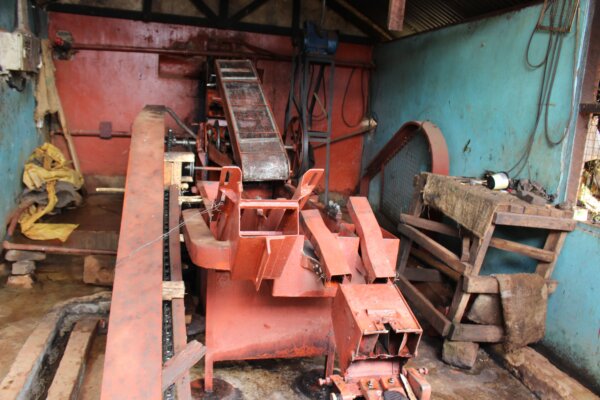 As we have in prior years, we bought a selection of lots directly through the Nairobi Coffee Exchange. Process-wise, that means they first came to us through the auction catalog. Then, we cupped them, decided we wanted them, and discussed prices with a long-term trusted trade partner who then bid for the coffee on our behalf. These lots include famous names like Gondo, Kiangoi, and Karinga purchased solely based on how they shine on the cupping table.
Building Traceability & Staying Agile
 These Kenya coffees represent our continuous work to be the best sourcing partner we can be—to bring in phenomenal coffee while maximizing traceability, to support old partnerships while exploring new ones, and to deliver the most possible value to both ends of the supply chain.
Interested in sourcing coffee with us? Reach out at info@redfoxcoffeemerchants.com. To learn more about our work, check out our journal and follow us on Instagram @redfoxcoffeemerchants.