
After an incredibly successful first venture last year, we’re excited to be bringing in Burundi coffees once again. Offerings include not just spectacular washed coffees but also some of our favorite naturals in the world, with both categories exhibiting a wide variety of profiles.
Like last year, we’re sourcing from three core partnerships: Burundi Specialty Seeds in Western Kayanza, Ephrem Sebatigita in Kayanza Centre, and PROCASTA Nkanda in Ngozi.
The coffees will start shipping in the coming weeks with arrival starting in late November. The coffees are special, cultivated and processed with careful attention not just to flavor but to physical specs and logistics management.
Notes from Joel in the Lab 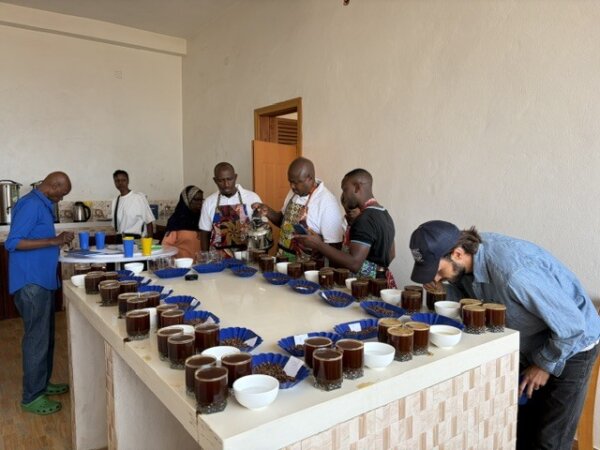
Below are Global Quality Manager Joel Edwards’s notes on washed and natural lots from our three core relationships, BSS, The Coffee Belt, and PROCASTA Nkanda:
BSS (Burundi Specialty Seeds, Kayanza):
BSS Natural: Exceptionally clean and sweet, with complex mixed berry profiles and subtle florals. The acidity is mild and predominantly citric while the body tends to be on the rounder side.
BSS Washed: A larger range with red and darker fruit profiles, some with baking spices and all with a concentrated sweetness. The acidity is sharper in some of their washed lots, having both malic and citric, while others have a more balanced profile.
The Coffee Belt (Ephrem Sebatigita, Kayanza)
The Coffee Belt Washed: The washed lots from The Coffee Belt, also in Kayanza, tend to have bigger citrus, red fruit and florals like hibiscus and even jasmine with sweet lower tones like dark chocolate and cocoa nibs.
The Coffee Belt Natural: The natural is clean, with mixed berry notes and a mildly lactic creaminess. Citric and tartaric acidity, very sweet.
PROCASTA Nkanda (Pierre Nzeyimana, Ngozi)
PROCASTA Nkanda Washed: Coming from Ngozi, the Procasta washed lots have a deeper minerality, with lower tones like dates or figs but also higher notes like musk melon and green apple. The acidity is milder and mostly malic. These are beautifully balanced coffees.
PROCASTA Nkanda Kamira Natural: More process-forward, with ripe strawberry and fresh blueberry notes upfront and a lingering sweetness.
2026 Harvest Details 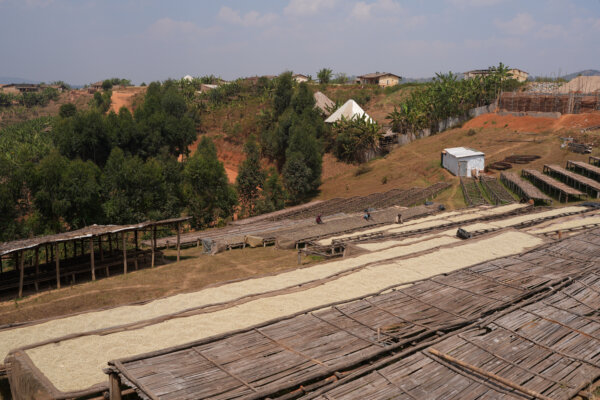
While this is only our second time at Red Fox offering Burundian coffees, various team members have deep history with Burundi earlier in their coffee buying years. We’re back this year, getting our spoons in each and every cup and leveraging our market connections, quality control systems, and logistical expertise to help bring these coffees in and make sure they have ready buyers.
The Burundi harvest has been strong with excellent rainfall in the northwestern areas of the country, but production in the east & south has been lower than the previous season. Our supply chain partners have wrapped production and milling. After that, they’ll make their way to port and should ship by end of August.
Burundi’s coffee governing body ODECA sets prices each year based on several factors, including the C market. Last year, in response to the high C market, they doubled cherry prices. This year, they’ve elected to keep cherry prices the same as last year’s, despite a C market that’s come off significantly. While those high prices benefit smallholder farmers, they also present a challenge to washing stations and exporters who were hoping for relief with the current C market price. That’s causing tension between farmers and buyers.
Additionally, rising fuel costs are hitting the already fuel-limited and financially challenged Burundi very hard. Most of Burundi’s washing station owners aren’t tapped into the electrical grid & rely on fuel to operate their pulpers far off the beaten path up country, so they’re extremely vulnerable to those cost increases.
Nevertheless, our Burundian partners have continued building stable, secure, and quality-driven operations designed to weather the long haul. We’re excited to bring these in again and get them in your roaster.
Burundi Specialty Seeds (BSS), Western Kayanza 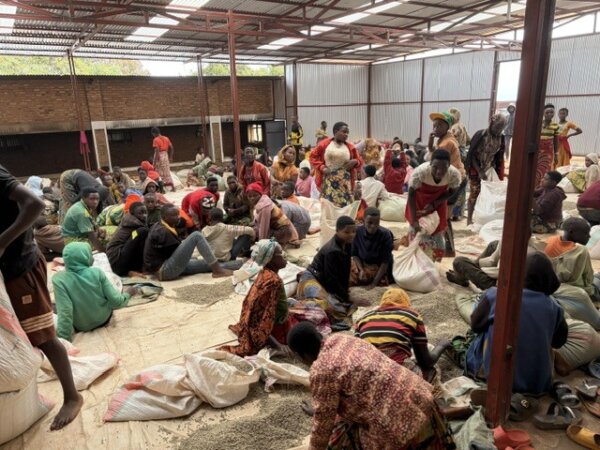
BSS is run by three Burundian producers and veterans of the trade: Picasso Nduwayo, Zephyrin Banzubaze, and Jeremie Nakimuhana. They’ve developed an innovative coffee production and exporting business model over the last several years in Burundi.
Few Burundian coffee washing station owners also farm coffee at a large scale, but the BSS crew has developed a unique, progressive land-lease model using World Bank funds to rehabilitate fallowed lands and plant over 38,000 coffee trees, producing tons of top-tier specialty coffee. Alongside their own production, they also purchase cherry from surrounding smallholders and act as a communal hub, sharing their extensive experience.
BSS has long produced exceptional natural coffees, but as of 2024 they’ve also gotten their own washing station up and running and added stellar washed coffees into the mix.
The naturals are crisp and fresh, not at all boozy or heavy, enhanced by 3-5 days of natural airborne yeast development followed by 25-30 days carefully-tended sun drying.
These coffees come from soaring altitudes ranging from 1800-2200 meters above sea level, with rich red clay soil. This area is nestled against the huge Kibira National Forest with thick canopies and wetter weather than other Burundian growing areas. You’re already in the “up country,” as locals say, so you’re not seeing major altitude differences when you travel through Kayanza, but you’re already noticeably high. This area is where the former monarchy government’s kings are buried, with massive indigenous trees surrounding their graves.
Profile-wise, these coffees are an immaculate expression of Western Kayanza terroir, with a highly distinct effervescence and clarity of flavor. The washed lots have notes of tropical fruit, passionfruit, raspberry, and lemon cream, with abundant jasmine florality. The naturals are crisp and fresh, not at all boozy or heavy, enhanced by 3-5 days yeast development followed by 25-30 days carefully-tended sun drying. They have notes of blackberry, blueberry, fig, vanilla, Juicy Fruit gum, fresh strawberry, and pink starburst.
Their coffees are separated by hills (“collines” in French) made up of small familial communities, cupped by the day lot then milled and composed with precise traceability.
The Coffee Belt, Ephrem Sebatigita, Munkaze Washing Station, Kayanza Centre 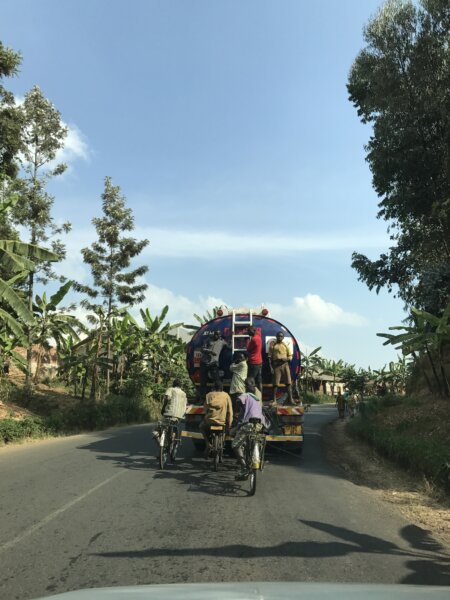
Ephrem Sebatigita runs Munkaze Washing Station in Kayanza Centre. A third-generation coffee farmer, he’s been working in the coffee industry for decades and is often referred to by locals as their “coffee grandfather.” Ephrem has contributed incredible value to Burundi’s supply chain. He’s an electrical engineer by trade and has built and managed multiple dry mills, consults for farmers, leads CQI trainings, and produces some of the finest coffees in the country. He also spent years working for the coffee governing board as one of its core project managers. In 2023, at World of Coffee in Athens, Ephrem received the Instructor of the Year award from CQI for his contribution teaching others how to elevate their quality and farm management.
Munkaze Washing Station sits right off the road just east of Kayanza Centre, creating excellent access for his cooperative partnerships and his nearby multi-generation family farm to deliver cherry. His other family farm, Rubagabaga, is a bit further, but rich with history. In the 1930s, Ephrem’s grandfather planted some of the first coffee trees on this farm in Kayanza, establishing a through-line to Ephrem’s amazing career today. A few of those original trees are still on the Rubagabaga farm today to commemorate its history. In the 2018 Cup of Excellence, part of the winning lot came from Rubagababa and was processed by another neighboring station, while Ephrem’s lot processed at Munkaze took second place—meaning he and his team essentially won by both first and second place that year.
Far smaller than BSS, his operation has grown slowly, conservatively increasing capacity over time. It’s not built for large-scale production, so the coffees from here are fewer and extremely coveted. He plans to continue growing. He’s a teacher and community leader first though, and it shines through in his operation.
The terrain is still distinctly Kayanza, with incredible elevation ranging from 1800-2200 meters above sea level and rich red clay soil. Direct proximity and influence from the Kibira National Forest creates thick tree canopies and wetter weather than Ngozi.
Pierre Nzeyimana, PROCASTA Nkanda Washing Station, Ngozi 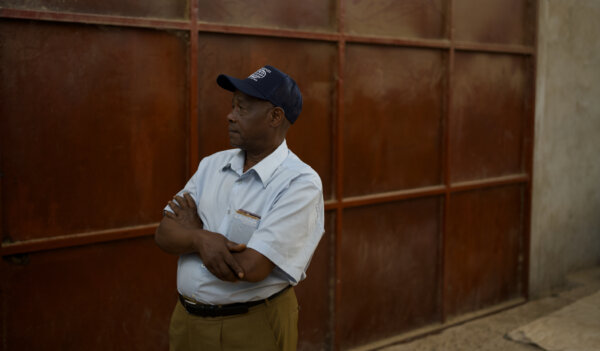
Our sourcing pipeline with Pierre Nzeyimana and PROCASTA Nkanda Washing Station dates back to 2017. At the time, they were producing amazing quality in underserved areas of Burundi but lacked a consistent invested partner to bring their coffees to the specialty market. We’re able to continue building that bridge, adding QC, financing, logistics, and market access.
The Ngozi province hasn’t been the primary target for most coffee buyers in Burundi—Kayanza, which is more densely populated with producers, gets most of the love. Historically, Ngozi coffees have often been marketed as quantity-first blender cups, with many failing to appreciate its unique, eloquent profile. Ngozi’s hard, rocky, laterite soil (as opposed to Kayanza’s rich, sandy, red clay soil), combined with careful planting, tending, harvest, and processing, yields dense coffees that take heat beautifully in the roaster and showcase a bigger profile with juicy body and heaviness with cola and cocoa sweetness, stone fruit complexity, and citric acidity—more like Kenyan coffees. Kayanza washed coffees are gorgeous too, but they tend to be more delicate and tropical.
These classic, distinct washed coffees are separated by hill and community (typically extended multigenerational families), honoring the microclimates within their reach. Most hills average around 100 trees, up to one to two thousand maximum at the upper limit, as opposed to the 38,000 we see in BSS. Nyankurazo, Cumba, Maramvya, Kamira, and homebase Nkanda are the core communities that contribute cherry. Pierre and his three adult sons run the washing station, managing various parts of the process.
Compared to the progressive, forward-driving tone of BSS’s operation or Ephrem’s education-focused station, PROCASTA Nkanda is more rugged, old-school, and self-sufficient—much like Pierre himself, who is no-frills and focused on simply getting the job done properly. That ethos has been ideal for taking Ngozi’s potential to the next level.
Terrain-wise, Ngozi is more arid with a dry, rocky landscape, especially when driving deep into its rough roads. It’s heavily laden with eucalyptus, and small but densely populated.
What They Have in Common 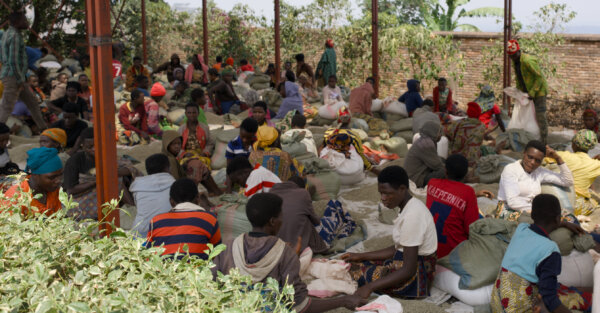
In all of these partnerships, producers are aided by communal leadership and peer mentorship. Each involves close communities of extended families who prize wisdom and experience as well as youthful enthusiasm, and who like to see their coffees valued equally as representing each community member’s equal value. That’s why we don’t have producer separations despite comprehensive traceability.
All of these coffees are superb. We are so glad to be bringing them in and excited to taste your roasts of them. 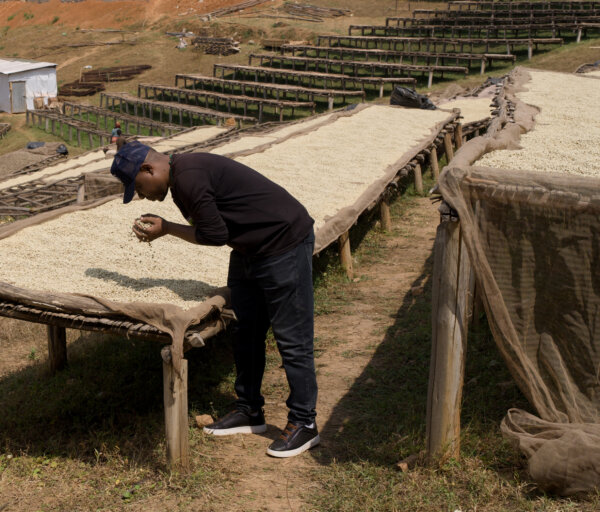
Interested in sourcing coffee with us? Reach out at info@redfoxcoffeemerchants.com. To learn more about our work, check out our journal and follow us on Instagram @redfoxcoffeemerchants.